
Do you want to know what’s behind the curtain?
Pearl Girl Blog
Classical ballet is beautiful. But at what cost?
Pearl Girl is a collaborative exploration.
Our mission is to shed light on the corruption in the ballet industry that is hidden in plain sight.
It is a collective of ballet artists who love the art form and do not want to be silent anymore.
Join us in a journey to ask questions to expose what is hidden in plain sight.
And to advocate for innocence.
CONTACT:
pearlgirl@fastmail.com
-
Why Whipped Cream?
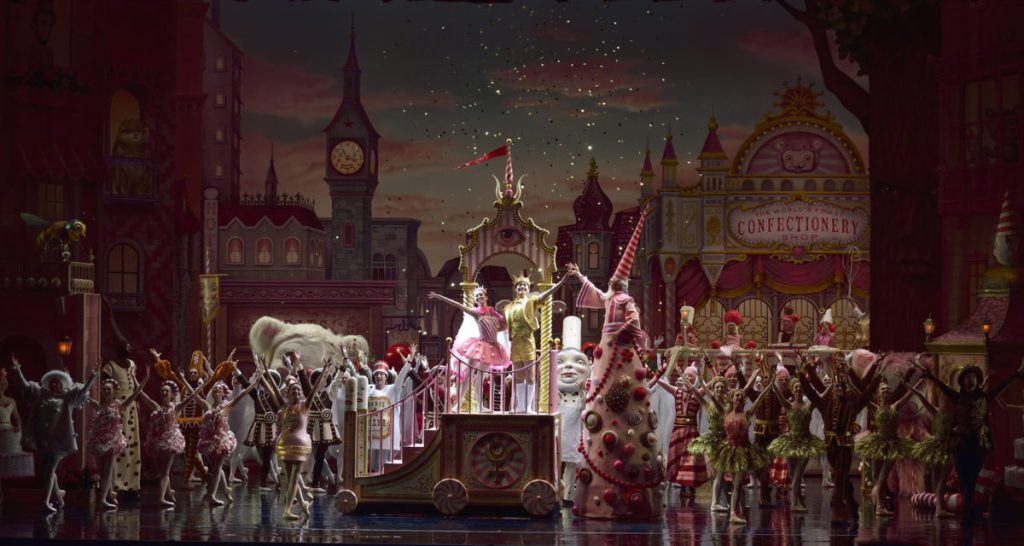
This blog is a quick one, to start the conversation about Alexei Ratmansky’s Whipped Cream. It is based on the two-act ballet, originally created as Schlagobers, with choreography by Heinrich Kröller, received its World Premiere at the Vienna State Opera on May 9, 1924. Alexei Ratmansky choreographed Whipped Cream for American Ballet Theatre, which had its premiere in Costa Mesa, CA, on March 15, 2017 at Segerstrom Center for the Arts and its New York premiere on May 22 of that year, both featuring Daniil Simkin (The Boy), Stella Abrera (Princess Tea Flower), David Hallberg (Prince Coffee) and Sarah Lane (Princess Praline). Choreography by Alexei Ratmansky, Libretto and Score by Richard Strauss, Sets and Costumes by Mark Ryden, Scenery Supervisor: Camellia Koo, Costume Supervisor: Holly Hynes, and Lighting by Brad Fields.
Let’s start with the summary of the plot:
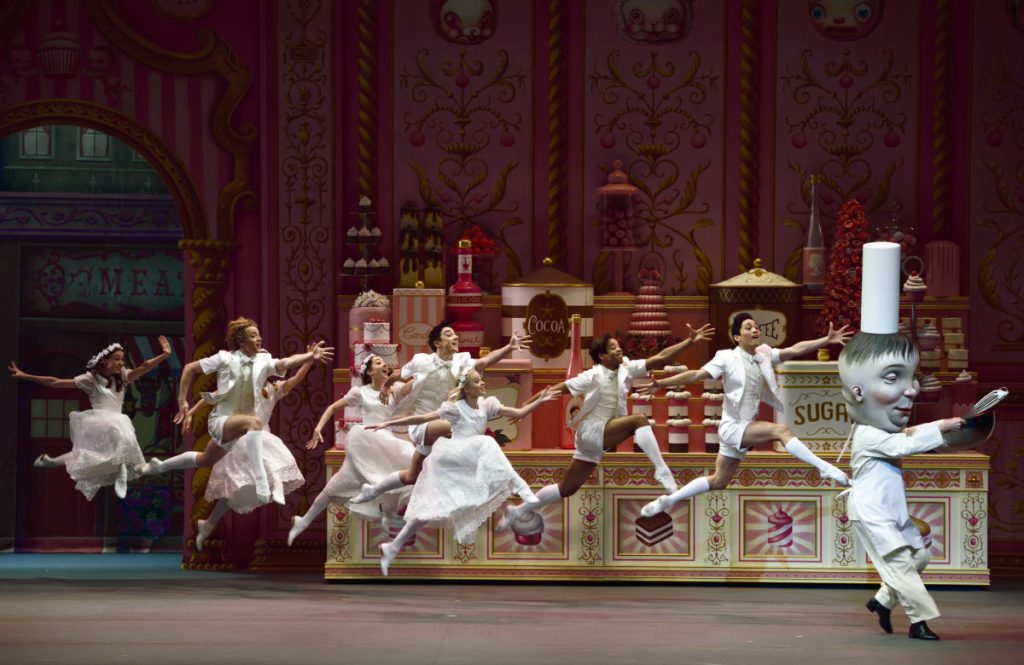
ACT I: On a beautiful Sunday, a Boy and his friends receive their first communion. To celebrate the special occasion, they are taken to a confectioner’s shop, where they are served their favorite sweets. The Boy, who particularly loves whipped cream, eats so much that he becomes ill and has to be taken away. With the children gone, the shop comes alive. Marzipan archers, spear-wielding Sugarplums and swashbuckling Gingerbread Men engage in military exercises. Princess Tea Flower appears and is captivated by Prince Coffee, whom she chooses as her mate. Prince Cocoa and Don Zucchero attempt to win her favor, to no avail. The Chef appears with his bowl and whisk, whisking cream, and the shop fades away into a world of the Boy’s dreams of a world made entirely of whipped cream.
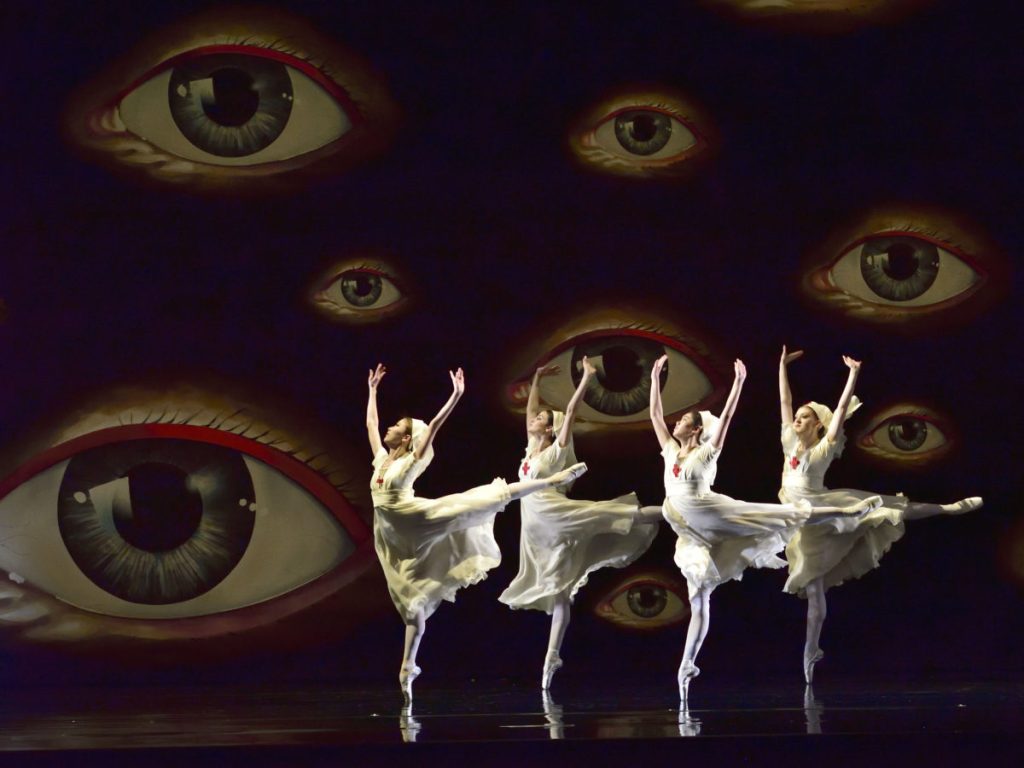
ACT II: The Boy, still sick from too much whipped cream, finds himself in a dark and sinister hospital room attended by a Doctor and an army of Nurses. They give him medicine and leave the room. In their absence, a fantastic procession, led by Princess Praline, arrives and helps the Boy escape. The Doctor is suffering from a headache. He tries to relieve his pain with liquor. Then the liquor bottles come to life. The Nurses return and see that the Boy has disappeared. They find him and lead him back to his bed, but the liquor bottles intervene and intoxicate the Doctor and Nurses, allowing Princess Praline to free the Boy and whisk him away to her kingdom. In the main square of Princess Praline’s domain, creatures of all kinds are celebrating. The Boy meets Nicolo, the Master of Ceremonies, who welcomes him to this fantasy world that will now become reality.
Let’s break this down a little bit, quickly.
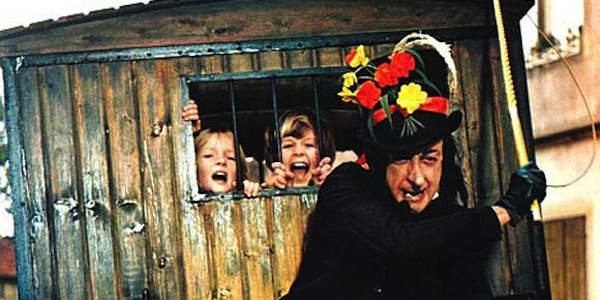
1. It’s a Sunday when the ballet opens, with children and a priest. There are no parents present, no other adults except the priest. The priest alone ushers the children into a carriage and takes them away, promising them a reward. Sound familiar? The carriage reminds me of the child catcher in Chitty Chitty Bang Bang, except the children are gleefully and willingly going with the priest, with the promise of sweets and candy.
2. The treats and tea and coffee entertain the boys and girls until our hero gets sick. The snatching and grabbing of sweets is unsettling. And did you know that the first definition of whipped cream in the Urban Dictionary is someone being controlled by their lover?
3. The ‘all seeing eye’ in Act II is a symbol used in programming by MK Ultra mind control. And the fact that the boy cannot escape being watched is a programming tool for those under mind control.
4. Princess Praline introduces him to her creatures, which includes worms, a yak and a naked baby. The final wedding being an underage boy and the mature Princess Praline includes a baphomet horns beyond the gazebo, including many other symbols such as the all-seeing eye again, clowns, and furries.
I did some research on the set and costume designer, Mark Ryden. Ryden recently designed a Barbie line for Mattell, including a meat purse and beehive theme (occult symbolism). His work makes my stomach churn, and you can check it out for yourself on his Instagram page or website.
Here is what Vanity Fair has to say: “Only Ryden’s meticulously rendered, “sinister, creepy, disturbing, but saccharine-sweet images of children,” Ratmansky decided, could accurately articulate his vision for Strauss’s score and libretto and his own choreography. … Though by Act II the gluttonous hero winds up hospitalized, hallucinating, and tormented by an ominous doctor and a needle-brandishing nurse, the ballet ends jubilantly, with anthropomorphic candied companions joining him ‘in a celebration,’ Ratmansky reports…’That is the ‘joy’ Strauss was talking about.’”
Always ask “Why?”
As Christians, we need our antennas and spiritual discernment up on this one. This is not harmless, and it has an ultimate agenda which started a long time ago. There will be more on this coming soon regarding the bigger things at stake here. But for now, I will just say this. Always ask “Why?” when encountering a ballet that seems “brilliant” but yet makes your skin crawl. There is a reason why.
Join me to seek it out and ask the right questions!
Pearl
Follow me on Facebook (Pearl Whittaker: click here)
Photos from American Ballet Theatre’s website, by Gene Schiavone.
-
Both eyes open
Hi everyone! I am back after a long hiatus. And I am kicking. Check out the below blog and I would love to hear your feedback and research: pearlgirl@fastmail.com. Thank you for standing with me! – Pearl
14 AUGUST 2023
To the ballet lover who holds the conviction that beauty and purity are not mutually exclusive:
I am here with you.
In fact, this ballet lover believes and knows that beauty and purity are in fact dependent on each other to exist. And I know, as possibly do you, that true beauty cannot be impure. Can purity turn a blind eye? Purity must have both eyes open. And true beauty must indeed be pure. Yet, here we are in the ballet industry as it exists today, twisted with impurity to its core. Where perversion is hailed as beauty and has been for centuries. Whatever allows the dancer to attain the unattainable, perceived ‘perfection,’ is used: no matter the cost. A blind eye is willingly turned to depravity in the name of art. And in the name of funding. And in the name of not losing opportunities.
Right now, I feel like a ballet lover who is weary and disenchanted. I believed the best of the ballet world. Until I journeyed to the realization that classical ballet has been tightly intertwined with dark and demonic themes. The journey for me began nearly a decade ago, intensifying in the last 7 years to get to this place. Perhaps that is you as well. And perhaps you have been too disenchanted to even accept these realities, because it feels impossible to have anything different. The pockets of ‘good’ we perceive and experience tell us that the dark and demonic systemic realities are not that bad. That there’s something slightly redeemable. It feels like the industry, in order to be itself, must remain as is. And to admit that this current state of the industry is not the best feels like a betrayal of the essence of ballet itself.
My journey began with acknowledging that there is an agenda, that is intentional and pervasive. And it is dark, even demonic. It began with opening both my eyes to these demonic agendas. Embedded in every major ballet company’s repertoire, are agendas. This awakening has not diminished the excellence of the artistry or the technique. But it taints and perverts any purity that was once there. And therefore, I would argue that it is not and can never be true beauty. Do you agree with me?
Here are few of the themes that I found embedded in the major ballet companies’ repertoire that we know and love so well. This is just a start.
MAGIC: Sorcery, witchcraft, spells, curses, maypoles, fortune-telling, seances, fairies, witches, .
IDOLATRY: Gold idols, cupids, eros, artemis, orion, goat idols, greek mythology, hinduism, roman mythology, pagan idolatry, muses, gods, goddesses, ritualism.
DRUGS AND SUBSTANCE ABUSE: Opium drugs, drug dreams, psychedelic drugs, common slang terms for common drugs (Google the meaning of terms such as candy canes).
PEDOPHILIA: Dream scenes including children, grooming of children (one-eyed uncles peeping into Clara’s bedroom, anyone?), seduction of children, journey to candy shops (by Catholic priests in Ratmansky’s Whipped Cream), child bride wooed to kingdom of sweets (yes, our beloved Nutcracker).
SEXUAL THEMES: Crudeness, sexual illustrations, heterosexual sex, homosexual sex, sexual references and themes, orgies, molestation, rape, body objectivity, harems (to name a few).
NECROMANCY: Ancestor worship, conjuring of spirits, sylphs, sprites, summoning of the dead (open your eyes to Act II Giselle).
BEASTIALITY: Animalistic behavior, sexualization of animals.
SUICIDE + TRAGEDY: Suicide (assisted, often glorified). Why is tragedy hailed as beauty?
SATANISM: Pagan rituals, cults, baphomets, all-seeing eye/third eye, satanic references & themes, illuminati symbolism, animal sacrifice, vampires, blood sacrifice, child sacrifice (check our Wayne McGregor’s AfteRite, a demonic re-make of The Rite of Spring set to Stravinky’s score).
This is a non-exhaustive list. All easy to research yourself. And it is in our faces. Am I the only one who is seeing this with both eyes open?
Do these themes and nuances prick at your conscience, too? Do you question whether they should be accepted as the pure form of our art form, but you do not know how to begin the conversation for something better? Is it possible to stop glorifying with and flirting with these themes?
Can we separate exquisite dance technique from the theme and themes surrounding these ballets. I am hard pressed to locate one major renowned ballet repertory void of the majority of this list. Can we be honest and say this? Or do we have to settle for tolerating evil – because I am no longer comfortable dancing around the issue. It is evil. And it is in every ballet that we attend and take our children to see.
I want to believe that there can and will be an industry in which the major ballet companies of the world have more to their repertoire. And by God’s grace, I am on a journey to believe it. Imagine, ballet free from all points above, that encapsulate beauty without degradation: without a robbing of innocence.
So many of the classical ballets are not only said to be child-friendly, but are declared to be for children and are often danced by children. Yes, even AfterRite had students involved when American Ballet Theatre performed it at the Metropolitan Opera House in May 2018. There was no warning to parents about the horrific ending audiences would encounter.
It must be possible to have both beauty and purity coexist even in the ballet industry. As it is, our children are counting on it. I don’t have my own children yet, but I recently had an experience that woke me up to the fact that my own niece and nephew would be exposed to demonic and dark themes when just attending a family matinee by a national ballet company. I had to acknowledge that the ballet I loved contained and showcased bestiality, witchcraft, and that they would be exposed to that. I had grown accustomed to it in the name of the classical art, but my numbness could have been to their detriment. I don’t want to tolerate this in the name of “the classics” of ballet. I want to be able to send my children to classical ballet that does not impose any of the above dark and demonic agendas in order to enjoy the art form. I believe that there can be this future. Do you want this, too?
So, here I am, standing with you, the ballet professionals who are awake. Not woke. But awake. Both eyes open: Seeing parents hesitate to send their child to study at a mainstream dance institution. Watching dancers being offered contracts who do not want to sign the dotted line, because they fear compromise. Here we are: now. And now may be the time to take the first step towards a new reality.
“For such a time as this” we are awake, and we can see. Am I ready to begin the journey to pull back the curtain of classical ballet? This is the question I ask myself. And I ask you, will you join me? We who are in the industry, know that there is no going back once the curtain is lifted. You cannot ‘un-see’ these dark and demonic agendas anymore.
I want to believe in a future where beauty and purity can coexist, fully entwined in the art that we love. I want to believe that hope can mean beauty in this industry. Pure, untainted, real hope. Hope that is fulfilled. Not so-called hope that is torn up in a tragic wasteland named the ‘pinnacle of beauty’. I want the next generation to be able to behold true beauty, never at the cost of their innocence. Will you believe with me?
JOIN ME. Contact me today at pearlgirl@fastmail.com
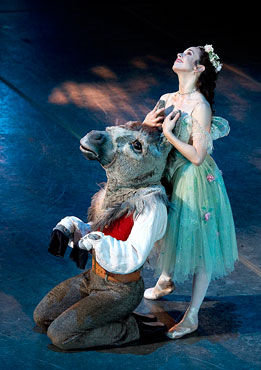
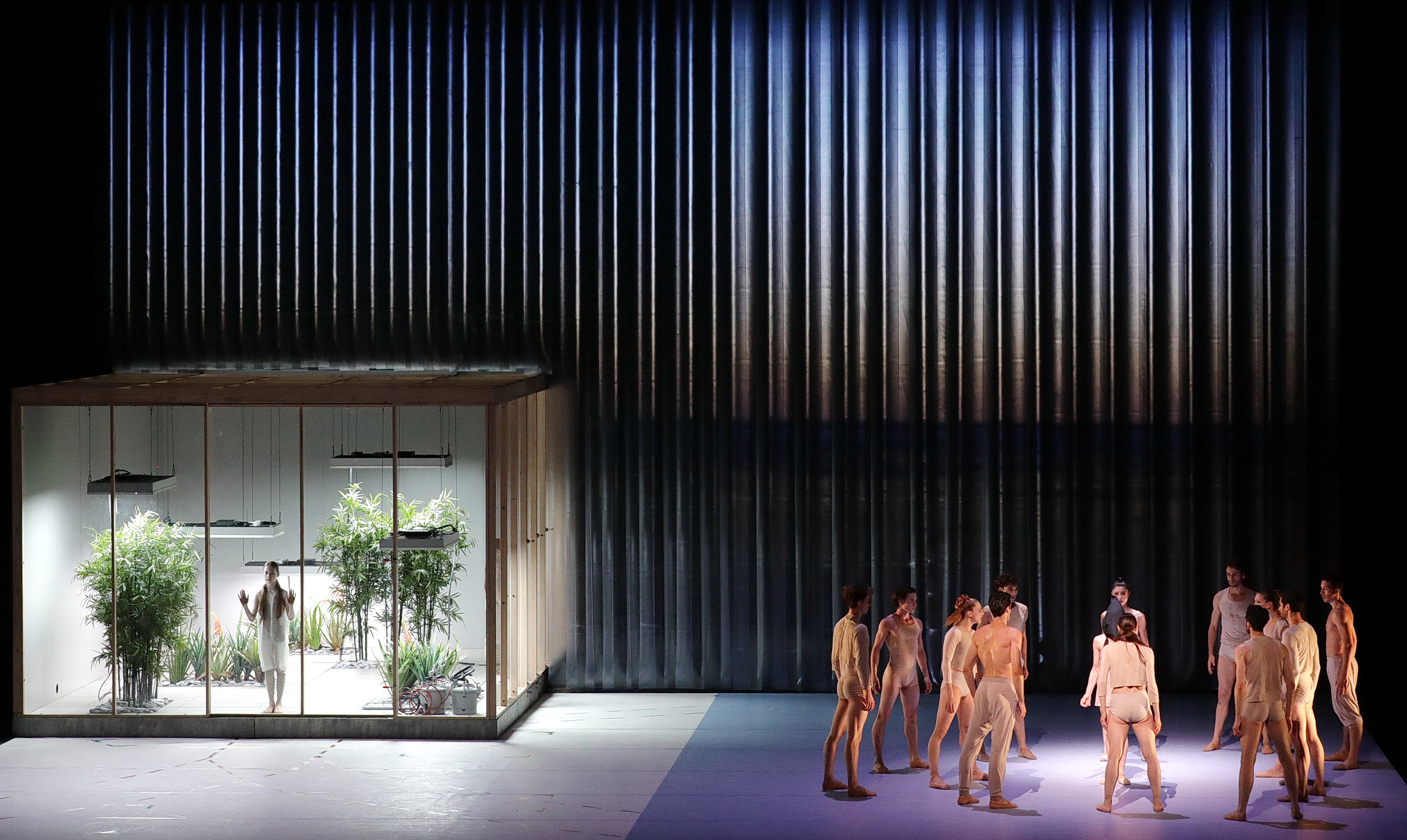
Top photo is Xiomara Reyes in The Dream. Below photo is Wayne McGregor’s AfteRite (spelled with the R in bold, blood red), a world in which a mother has to choose which of her two children to sacrifice.
The Red Shoes | March 25, 2022
What is the ballet, “The Red Shoes,” really about?
In my research regarding SRA (satanic ritual abuse), I came across the term “the red shoes.” After that time, I was confronted with the symbolism of the red shoes that I see in so many stories and movies. Could it be a coincidence or does it have a deeper subliminal meaning that has been right in front of me?
I was first introduced to the ballet, The Red Shoes, choreographed by Sir Matthew Bourne, in 2017. It is based broadly on the 1948 film The Red Shoes by Michael Powell and Emeric Pressburger. The ballet was premiered on 6 December 2016 at Sadler’s Wells Theatre, London, by Bourne’s ballet company, New Adventures.
A little background on Bourne. I went to see his interpretation of The Sleeping Beauty at City Center in 2014, with a vampire reimagining of the classic tale. Also, I had seen his renown Swan Lake, featuring male swans in a beautiful and profound way, mixed with sexual undertones with a progressive agenda. Bourne himself is openly gay and nonapologetic about promoting that lifestyle. Part of his goal in choreographing Swan Lake was political—to make homosexuality acceptable, as he said—and he achieved it.
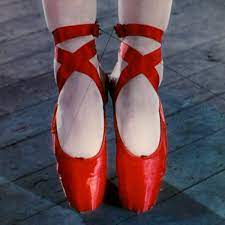
The Red Shoes ballet is a little different from the fairy tale. A young woman buys a pair of red shoes from a shoemaker. She puts them on and starts dancing with her boyfriend. She gets carried away dancing with man after man at a carnival. She tries to go home, but the red shoes keep dancing. She hallucinates. Almost dead from exhaustion, a priest helps her remove the shoes and she dies. The shoemaker comes back to pick up the red shoes for his next victim. Like all too many ballet themes, this ballet seems glorified tragedy and in this case, even horror. Some may say it seems harmless enough but I ask what is the purpose?
Bourne remembers an experience about one of his earlier ballets, that motivated him to form New Adventures. He spoke about sitting in the audience during one of his ballets: “the people around me were totally silent, leaning forward in their seats. You could hear a pin drop. I realized that that was a big part of why people came to the theatre—to have this gut-wrenching emotion. And I saw that I could give it to them. I could move people, and I wanted to.” From then on, for a subject to engage him, it had to have “a darker side, a heart to it, something that meant something to me.”
Former American Ballet Theatre Principal Marcelo Gomes starred in the ballet “The Red Shoes” in Fall 2017. In December 2017 Marcelo Gomes left American Ballet Theater after sexual misconduct allegations. Was it a coincidence that his affiliation with Bourne was close to the time of these serious allegations coming forward? An internal company memo stated that on Saturday, December 16, 2017, ABT was made aware of a highly concerning allegation of sexual misconduct by Mr. Gomes, occurring approximately eight years prior. An internal verbal statement from ABT Artistic Director, Kevin McKenzie, showed remorse that the allegations had come forward and notified the company of Gomes’ intention to separate himself from ABT. Amid the investigation, Mr. Gomes put forth his resignation. His name and image were immediately removed from any press, casting or publications. Amid all of this correspondence, internal sources do not reference any remorse shown on behalf of the victims themselves.
What is ‘the darker agenda’ that Bourne was speaking about? What is the plan for the minds and hearts of the next generation? Could it be connected to something much deeper and darker?
The Red Shoes have been a symbol of abuse, pedophilia and satanic rituals for centuries. Recently, the symbol has been affiliated with the covered-up evidence. What is hidden in plain sight?
Please contact us at the link below to ask your questions and keep the discussion going further.
Contact us:
Please let us know your experiences. We are here to help.
Click the link below or email us at pearlgirl@fastmail.com
Email: pearlgirl@fastmail.com
 Pearl Girl