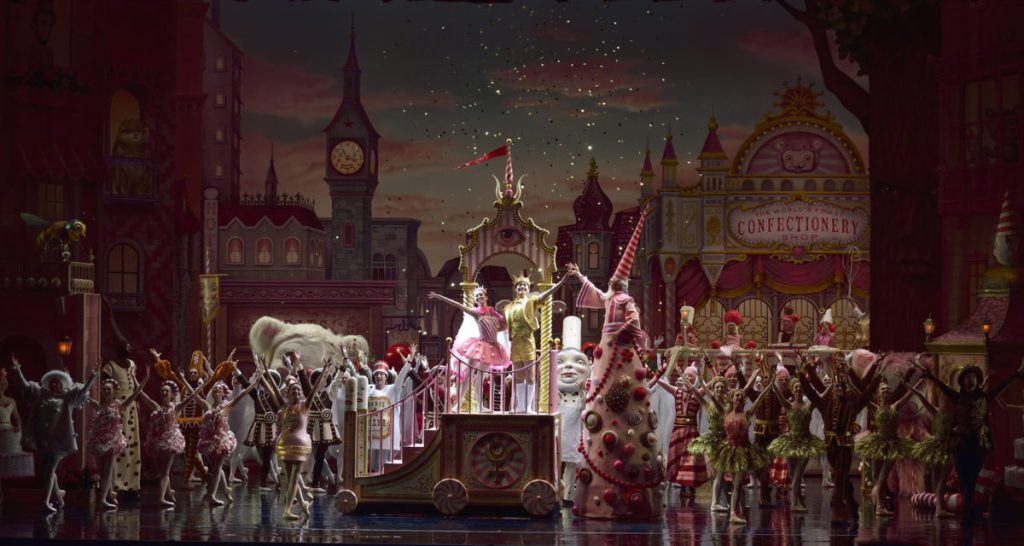
This blog is a quick one, to start the conversation about Alexei Ratmansky’s Whipped Cream. It is based on the two-act ballet, originally created as Schlagobers, with choreography by Heinrich Kröller, received its World Premiere at the Vienna State Opera on May 9, 1924. Alexei Ratmansky choreographed Whipped Cream for American Ballet Theatre, which had its premiere in Costa Mesa, CA, on March 15, 2017 at Segerstrom Center for the Arts and its New York premiere on May 22 of that year, both featuring Daniil Simkin (The Boy), Stella Abrera (Princess Tea Flower), David Hallberg (Prince Coffee) and Sarah Lane (Princess Praline). Choreography by Alexei Ratmansky, Libretto and Score by Richard Strauss, Sets and Costumes by Mark Ryden, Scenery Supervisor: Camellia Koo, Costume Supervisor: Holly Hynes, and Lighting by Brad Fields.
Let’s start with the summary of the plot:
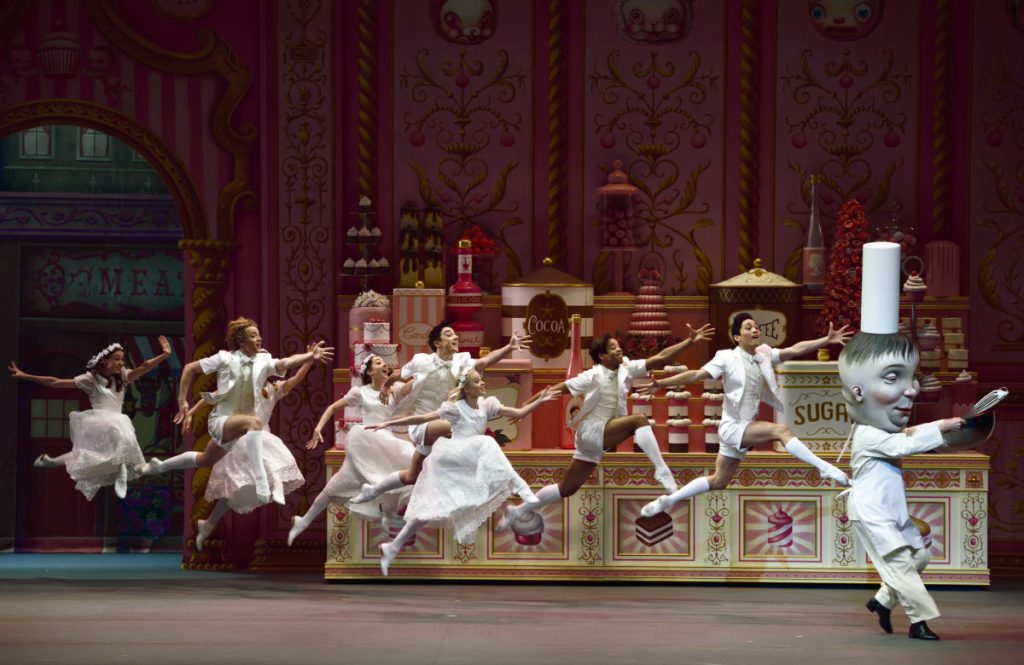
ACT I: On a beautiful Sunday, a Boy and his friends receive their first communion. To celebrate the special occasion, they are taken to a confectioner’s shop, where they are served their favorite sweets. The Boy, who particularly loves whipped cream, eats so much that he becomes ill and has to be taken away. With the children gone, the shop comes alive. Marzipan archers, spear-wielding Sugarplums and swashbuckling Gingerbread Men engage in military exercises. Princess Tea Flower appears and is captivated by Prince Coffee, whom she chooses as her mate. Prince Cocoa and Don Zucchero attempt to win her favor, to no avail. The Chef appears with his bowl and whisk, whisking cream, and the shop fades away into a world of the Boy’s dreams of a world made entirely of whipped cream.
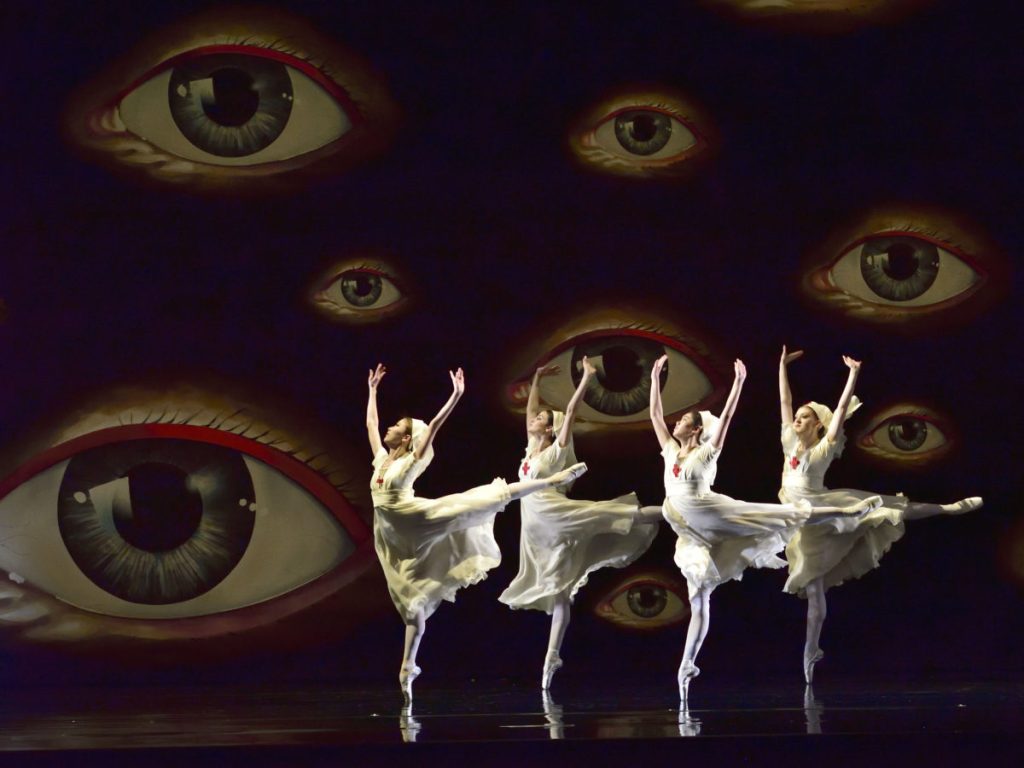
ACT II: The Boy, still sick from too much whipped cream, finds himself in a dark and sinister hospital room attended by a Doctor and an army of Nurses. They give him medicine and leave the room. In their absence, a fantastic procession, led by Princess Praline, arrives and helps the Boy escape. The Doctor is suffering from a headache. He tries to relieve his pain with liquor. Then the liquor bottles come to life. The Nurses return and see that the Boy has disappeared. They find him and lead him back to his bed, but the liquor bottles intervene and intoxicate the Doctor and Nurses, allowing Princess Praline to free the Boy and whisk him away to her kingdom. In the main square of Princess Praline’s domain, creatures of all kinds are celebrating. The Boy meets Nicolo, the Master of Ceremonies, who welcomes him to this fantasy world that will now become reality.
Let’s break this down a little bit, quickly.
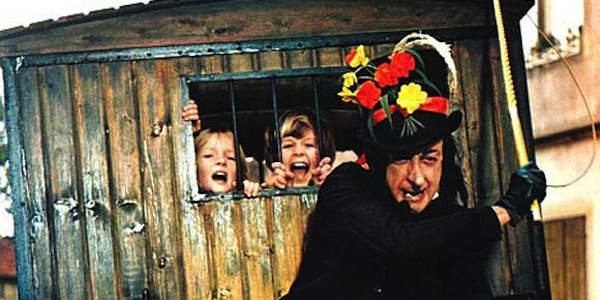
1. It’s a Sunday when the ballet opens, with children and a priest. There are no parents present, no other adults except the priest. The priest alone ushers the children into a carriage and takes them away, promising them a reward. Sound familiar? The carriage reminds me of the child catcher in Chitty Chitty Bang Bang, except the children are gleefully and willingly going with the priest, with the promise of sweets and candy.
2. The treats and tea and coffee entertain the boys and girls until our hero gets sick. The snatching and grabbing of sweets is unsettling. And did you know that the first definition of whipped cream in the Urban Dictionary is someone being controlled by their lover?
3. The ‘all seeing eye’ in Act II is a symbol used in programming by MK Ultra mind control. And the fact that the boy cannot escape being watched is a programming tool for those under mind control.
4. Princess Praline introduces him to her creatures, which includes worms, a yak and a naked baby. The final wedding being an underage boy and the mature Princess Praline includes a baphomet horns beyond the gazebo, including many other symbols such as the all-seeing eye again, clowns, and furries.
I did some research on the set and costume designer, Mark Ryden. Ryden recently designed a Barbie line for Mattell, including a meat purse and beehive theme (occult symbolism). His work makes my stomach churn, and you can check it out for yourself on his Instagram page or website.
Here is what Vanity Fair has to say: “Only Ryden’s meticulously rendered, “sinister, creepy, disturbing, but saccharine-sweet images of children,” Ratmansky decided, could accurately articulate his vision for Strauss’s score and libretto and his own choreography. … Though by Act II the gluttonous hero winds up hospitalized, hallucinating, and tormented by an ominous doctor and a needle-brandishing nurse, the ballet ends jubilantly, with anthropomorphic candied companions joining him ‘in a celebration,’ Ratmansky reports…’That is the ‘joy’ Strauss was talking about.’”
Always ask “Why?”
As Christians, we need our antennas and spiritual discernment up on this one. This is not harmless, and it has an ultimate agenda which started a long time ago. There will be more on this coming soon regarding the bigger things at stake here. But for now, I will just say this. Always ask “Why?” when encountering a ballet that seems “brilliant” but yet makes your skin crawl. There is a reason why.
Join me to seek it out and ask the right questions!
Pearl
Follow me on Facebook (Pearl Whittaker: click here)
Photos from American Ballet Theatre’s website, by Gene Schiavone.
 Pearl Girl
Leave a reply to Virginia Pike Cancel reply